
Gravel Driveway FAQ's
Get Your Gravel Driveway Installation FAQ's Answered
01. What Type Of Gravel Should Be Used On A Gravel Driveway?
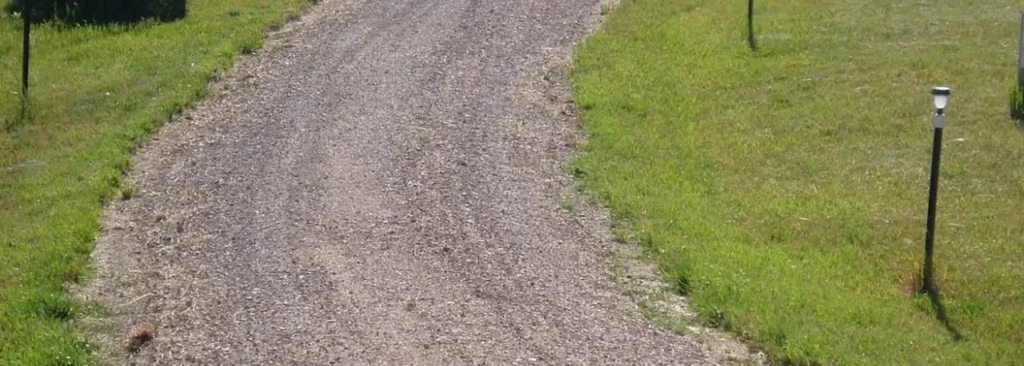
Answer: Contrary to popular belief, smaller diameter, rough edged, angular rocks combined with “crusher fines” or simply just crushed stone make for a much better gravel driveway as they compact very well.
Round larger rocks, pea gravel or any other round rock do not compact and become displaced and pushed to the edges of the driveway too easily. They are also not a good option for snowy regions where the snow needs to be plowed off.
02. How Much Does It Cost To Install A Gravel Driveway
Answer: No two driveways are the same. The cost to install a gravel driveway varies based upon several factors.
- The size of the driveway.
- The amount of excavation and grading needed for proper water drainage.
- The amount a person wants to invest in subgrade preparation to make the driveway strong, durable and able to withstand heavy trucks, RV’s, etc.
- Enhancing the appearance of the driveway with different colors of gravel or crushed stone.
As a result, these many different variables make it impossible to answer the question.
Get up to 3 FREE estimates from our certified gravel driveway pros.
03. How Long Does A Paver DriHow Thick Should A Gravel Driveway Be?veway Last?
Answer: There are several factors that will determine how thick the gravel should be on a gravel driveway and the intended use of it.
Many homeowners build a gravel driveway as a temporary surface until a hard surface driveway is installed such as asphalt, concrete or pavers. In this case, most asphalt, concrete and paver contractors would prefer to to the job thoroughly from the bottom up in order to warranty their work. So investing too much money into a temporary gravel driveway just isn’t worth the cost. In this case, 3″ to 4″ of gravel will suffice for 1 or 1 years.
On the other hand, many homeowners want to build a gravel driveway as a permanent structure with no plans to install a hard surface driveway. In this case, a sold base material like recycled concrete, limestone or road base should be installed 4″ to 6″ thick and compacted well. The variation in thickness is determined by the use of the driveway.
For common vehicles, 4″ should suffice. For heavy vehicles like RV’s, boats and coaches as well as trucks like trash trucks, propane trucks and septic trucks, 6″ would better suffice. This is all dependent on the soil in your area.
Once the base is installed, then 3″ to 4″ of gravel, crushed stone or recycled concrete can be added to the top to add visual interest to the driveway.
04. How Can A Gravel Driveway Be Prevented From Washing Out?
Answer: While there is no way to guarantee water will not wash out a gravel driveway, there are a few ways to minimize washout or washing away.
Some of these include:
- Designing the driveway with a slope that allows water to drain off in a controlled manner.
- Using a geogrid or geocell that locks the gravel into place.
- Using crushed aggregates opposed to using round aggregates.
05. What Is The Most Effective Way To Keep A Gravel Driveway Looking Well-maintained With Clean Edges?
Answer: It all begins with great quality installation. It’s virtually impossible to keep a gravel driveway looking good with gravel just dumped and spread out.
A well designed gravel driveway consists of smaller diameter, rough edged, angular rocks combined with fines or crushed stone.
Here are just a few things you can do to keep a gravel driveway looking clean and tidy:
- Keep weeds at a minimum by spraying an herbicide or inhibitor regularly, at the first sign of weeds popping up.
- Keep a rake and wheelbarrow handy. Tidy loose gravel up regularly by adding crushed stone as needed and compact it with a hand tamper or a plate compactor.
- If possible, edge your gravel driveway with railroad ties, metal or plastic edging, concrete or anything that can be recessed into the soil rather than something just laid on top. This will keep the gravel mix from spilling over onto the adjacent areas.
06. Can A Gravel Driveway Be Installed On A Slope?
Answer: Yes. But it takes good drainage planning only experts willing to take the time can provide.
Edging the driveway with concrete, metal or plastic edging and installing Geogrid or geocell can help tremendously.
07. Can I Install A Gravel Driveway Over An Existing Concrete Or Asphalt Driveway?
Answer: Yes. It’s certainly possible, but not recommended.
08. Is Recycled Asphalt A Good Choice For A Driveway?
The Short Answer: Some might say yes. I say no.
I’ve been in the business for over 30 years. I talk about recycled asphalt in this article I wrote. I would avoid recycled asphalt at all costs.
09. Is Recycled Concrete A Good Choice For A Gravel Driveway?
Answer: Absolutely, Yes! However, this is prefaced with one condition. Make sure the recycled concrete is not mixed with dirt or topsoil and is compacted very well.
10. What Is The Best Way To Edge A Gravel Driveway?
Answer: Here are several options ranked from 1 to 10:
- Concrete -Embedded
- Belgian Block – Embedded
- Pavers – Embedded and Mortared
- Pavers – Embedded
- Metal Edging – Embedded
- Plastic Edging -Embedded
- Creosote Lumber – Embedded
- Railroad Ties -Embedded
Get Your Gravel Driveway Maintenance & Repair FAQ's Answered
01. What Is The Best Way To Keep Weeds From Growing In A Gravel Driveway?
Answer: To stop weeds from growing in an existing gravel driveway, spray a weed inhibitor or herbicide directly on the driveway, being careful not to get to close to the edge near grass or flowerbeds.
Installing a geotextile fabric on a brand new driveway prior to adding the gravel can virtually eliminate weeds. However, although a minor part of the process, a weed inhibitor will always be on the list of ongoing maintenance tasks.
02. What Is The Best Way To Repair Potholes In A Gravel Driveway?
Answer: Potholes in a gravel driveway can be very difficult to fix and boil down to one or two problems.
Drainage and/or Soft Unstable Subbase
Everything all begins at the point of installation. If the driveway has been installed properly, and water drainage has been addressed properly, potholes can be fixed much easier, if they even arise.
We cover how to fix potholes in a gravel driveway in great detail here.
03. What Is The Best Way To Prevent Erosion On A Gravel Driveway?
Answer: Unfortunately there isn’t a simple answer to this question. There are many factors that determine the amount of erosion a gravel driveway can or will endure.
It all begins with the installation.
A properly installed gravel driveway with well planned drainage in mind, is the first step.
The second step is the material used to build the gravel driveway. Using angular aggregates (as opposed to smooth, round aggregates) mixed with “fines” or crushed stone, then compacted well, will create a much more stable gravel driveway that is less prone to erosion.
Even further, installing a geogrid or geocell will greatly reduce the chances of erosion.
04. What’s The Best Way To Maintain The Edges Of A Gravel Driveway?
Answer: The best way to keep the edges of a gravel driveway looking sharp and clean is by adding a solid border like a concrete, belgian block, pavers, metal or plastic edging.
05. What Is The Best Way To Control Dust On A Gravel Driveway?
Answer: There are companies that will add oil and/or dust suppressants to a gravel driveway to control the dust. However, environmental controls are quickly eliminating these types of dust suppressants.
06. How Do I Remove Snow From My Gravel Driveway?
Answer: Removing snow from a gravel driveway is extremely difficult, particularly if it’s a large driveway. Unfortunately, there are no secrets. It’s just the nature of owning a gravel driveway. Many people have tried, all have failed. If someone comes up with an effective solution, we will post it here.
Protect Yourself!
Register for our free eBook and Video series.